Down vs Synthetic Insulated Jackets (2026)
Down and synthetic insulated jackets compared on the specs makers publish: fill power, fill weight, hydrophobic treatments and what each insulation does in damp cold.
Independently chosen. As an Amazon Associate I earn from qualifying purchases: if you buy through our links, we may earn a commission at no cost to you. How we research
Quick answer
For dry cold, buy the Rab Microlight Alpine: 152 g of 700-fill down with a hydrophobic finish in a 15 oz jacket, per Rab. For damp weather or hard effort, buy the synthetic Rab Cirrus Flex Hoody, which Rab says keeps down-like loft in damp conditions. Both are sold by Backcountry.
Our picks
- Dry cold on the trail and in campRab Microlight Alpine Down Jacket, Men'sFrom the listing · not tested

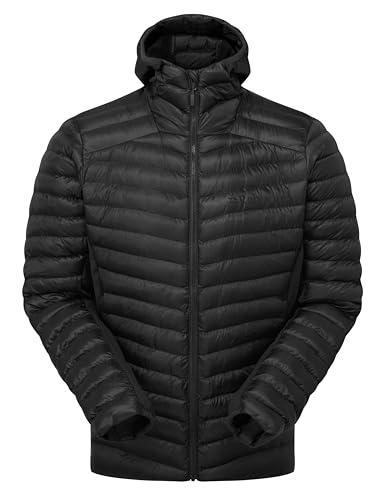


Down and synthetic insulation both trap still air; they differ in what happens when they get wet and how much they weigh for the warmth. Down is lighter and packs smaller. Synthetic keeps working when it is damp. The specs that tell you which jacket is warmer are fill power and, more importantly, fill weight, and most listings give only the first.
How we chose: we did not test these jackets; we compared fill power, fill weight, shell and insulation specs from the makers' pages and listings, and kept only jackets sold by Amazon.com, the brand's store or Backcountry and in stock on September 29, 2026.
Six insulated jackets side by side
| Jacket | Insulation | Fill or insulation weight | Jacket weight | Sold by | Amazon price |
|---|---|---|---|---|---|
| Rab Microlight Alpine | 700-fill hydrophobic down | 152 g, size M | 428 g | Backcountry | $280.42 (Amazon, as of Sep 29, 2026, 5:20 PM UTC)Check price |
| Rab Cirrus Flex Hoody | PrimaLoft Silver Rise | Not stated by Rab | 15.7 oz (445 g) | Backcountry | $129.50 (Amazon, as of Sep 29, 2026, 5:20 PM UTC)Check price |
| Columbia Delta Ridge II | 650-fill down | Not published | Not published | Amazon.com | $150.00 (Amazon, as of Sep 29, 2026, 5:20 PM UTC)Check price |
| Columbia Powder Lite II Hooded | Thermarator synthetic | Not published | Not published | Amazon.com | $115.50 (Amazon, as of Sep 29, 2026, 5:20 PM UTC)Check price |
| Rab Neutrino Pro | 800-fill hydrophobic down | 212 g, size M | 563 g | Backcountry | $450.00 (Amazon, as of Sep 29, 2026, 5:20 PM UTC)Check price |
| First Lite North Range | PrimaLoft Gold | 133 g/m² | 23 oz (652 g) | First Lite | $250.00 (Amazon, as of Sep 29, 2026, 5:20 PM UTC)Check price |
Prices are Amazon's, as of the time shown, and subject to change. Details
Rab's figures come from its product pages for the Microlight Alpine and the Neutrino Pro. The others are from the Amazon listings.
Fill power is quality, fill weight is quantity
Fill power is a volume. The testing lab IDFL describes it as the volume a set amount of down occupies under a set weight, reported in cubic inches per ounce. On IDFL's down testing page, common values run from 300 to 900, and "the greater the volume, the better the down will insulate."
So 800-fill down lofts more per ounce than 650-fill. That does not make an 800-fill jacket warmer than a 650-fill one. Rab puts it plainly: "Fill power is all about quality, not quantity."
Quantity is fill weight: how many grams of down are in the jacket. Rab publishes it. The Microlight Alpine holds 152 g of 700-fill; the Neutrino Pro holds 212 g of 800-fill. The Neutrino Pro has more down and higher-fill down, so on paper it is clearly the warmer jacket.
Columbia's listing for the Delta Ridge II gives 650 fill and no fill weight. Without that second number there is no way to rank its warmth against the Rab jackets from specs alone.
IDFL also notes that samples can be conditioned by several standardized methods before testing, so the same down can test at slightly different numbers. Treat a 50-point difference between brands as noise.

What happens when each gets wet
Down insulates by lofting. Soaked down clumps and loses that loft. That is why makers now treat it. Rab's listings describe Grangers hydrophobic finishes on both its down jackets and say the Microlight Alpine's treated down "traps body heat and dries quickly."
Read those claims for what they are: water resistance for the down inside the shell, not a waterproof jacket. Rab calls both shells water-resistant, not waterproof. In steady rain, a down jacket goes under a rain shell or stays in the pack.
Synthetic insulation is made of polyester fibers that do not absorb water the way down clusters do. Rab says the PrimaLoft Silver Rise in the Cirrus Flex "thrives in damp environments," and Columbia says its Thermarator insulation traps "warmth even when wet." Neither maker publishes a standardized wet-warmth test, so those are the makers' words, not numbers you can compare.
The practical rule: if the jacket will be damp from outside (wet snow, drizzle, a leaky tent) or from inside (sweat on a climb), choose synthetic. If the air is cold and dry and you need the most warmth for the least weight, choose down.
Which to buy
- Dry cold, hiking and camp: the Rab Microlight Alpine. Enough down for camp evenings, light enough to carry all day.
- Damp cold or hard effort: the Rab Cirrus Flex Hoody. Wear it on the move or under a shell.
- Everyday winter: the Columbia Delta Ridge II for dry days, the Powder Lite II for wet snow and sleet.
- Standing still in deep cold: the Rab Neutrino Pro. The most down here, and a hood that fits over a helmet.
- Hunting: the First Lite North Range. First Lite rates it for 20 to 45°F and built the pockets around a pack and bino harness.
Bottom line: buy one warm jacket for stops, not for moving. If you are sweating in it, it is the wrong layer for that part of the day; see our layering guide.
Patagonia and Arc'teryx make well-regarded down and synthetic jackets too, but neither sells them on Amazon through its own store, so they get no card here. Buy those from the maker.

Caring for down and synthetic
A dirty down jacket lofts less. Rab's down washing guide says to close the zips, turn the jacket inside out, wash it alone on a cool, long, gentle cycle with a non-biological or down-specific detergent, and air it for a couple of days afterward.
The same guide says to store a down jacket uncompressed in a cool, dry place. One left in its stuff sack all summer comes out flatter than it went in. Rab publishes a separate guide for synthetic jackets.
Cold, wind and hypothermia
An insulated jacket is only as good as the layers under it. Wind takes heat fast: the National Weather Service wind chill chart puts 5°F air in a 20 mph wind at a wind chill of -17°F. A windproof shell over the insulation keeps that wind out of the loft.
The CDC's hypothermia guidance recommends several layers of loose-fitting clothing and a water-resistant outer coat, and lists shivering, confusion, fumbling hands and slurred speech as warning signs. If you see them, get the person warm and dry and get medical help.
Related: merino vs synthetic base layers and mittens and gloves for extreme cold.
Our picks, in order
Ranked in the order we recommend them, from listings, certifications and standards. Where a price appears it is Amazon's, with the time it was read.
Dry cold on the trail and in camp
Rab Microlight Alpine Down Jacket, Men's
From the listing · not testedBuy it for cold, dry hikes and camp evenings where weight and pack size matter.
Pros
- + 700-fill recycled down with a Grangers hydrophobic finish, 5.3 oz (152 g) of fill in size M, per Rab
- + Pertex Quantum ripstop shell rated wind- and water-resistant
- + 15.09 oz (428 g) total in size M, per Rab; packs small
Cons
- - Limited stock at Backcountry when we checked; not a jacket for rain
Damp cold and sweaty climbs
Rab Cirrus Flex Hoody, Men's
From the listing · not testedBuy it if you will move in it, sweat in it, or wear it under a rain shell.
Pros
- + 100% recycled PrimaLoft Silver Rise insulation, which Rab says thrives in damp environments
- + 20D Pertex Quantum shell with fluorocarbon-free DWR; stretch Thermic fleece side panels
- + Under-helmet hood, two zippered hand pockets and one internal; 15.7 oz, per the listing
Cons
- - Rab does not publish a warmth rating, and fleece side panels let more wind through than a full shell
Town, travel and car camping
Columbia Delta Ridge II Down Jacket, Men's
From the listing · not testedBuy it for everyday winter wear and short outings, sold by Amazon.com.
Pros
- + 650-fill-power down, per the listing
- + Stitch-free heat-sealed baffles and Omni-Heat reflective lining
- + Omni-Shield finish for light precipitation
Cons
- - No fill weight published, so you cannot compare its warmth with the Rab jackets
Wet snow and everyday wear
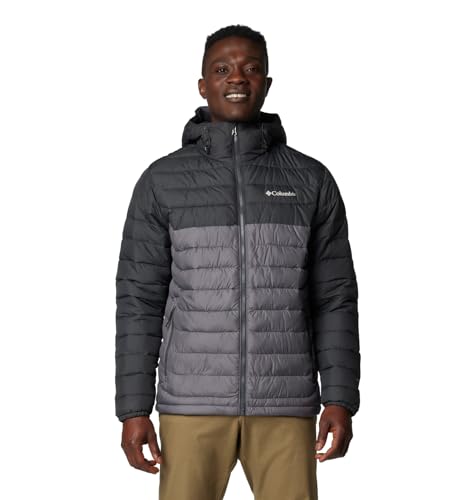
Columbia Powder Lite II Insulated Hooded Jacket, Men's
From the listing · not testedBuy it for sleet, wet snow and school runs, where a down jacket would soak.
Pros
- + Thermarator synthetic insulation that Columbia says traps warmth even when wet
- + Omni-Heat reflective lining; adjustable hood, drawcord hem, zippered hand pockets
- + Omni-Shield water repellency for light precipitation
Cons
- - No insulation weight published; heavier and bulkier than the Rab synthetics

Deep cold, belays and winter camp
Rab Neutrino Pro Down Hoody, Men's
From the listing · not testedBuy it for standing still in serious cold: belays, ice fishing, winter camp.
Amazon listed this as shipping later, not in stock now, as of Sep 29, 2026, 5:20 PM UTC.
Pros
- + 800-fill European goose down, 7.5 oz (212 g) of fill in size M, with a Grangers fluorocarbon-free hydrophobic finish, per Rab
- + Pertex Quantum Pro shell, windproof and water-resistant, with ripstop panels on shoulders and sleeves
- + Helmet-compatible hood; 19.9 oz (563 g) total in size M
Cons
- - Too warm for steady uphill hiking; the most expensive jacket here

Hunters glassing in the cold
First Lite North Range Puffy Jacket, Men's
From the listing · not testedBuy it for late-season sits and glassing where noise and wet brush matter.
Pros
- + PrimaLoft Gold 133 g/m² insulation in body, arms and hood, rated by First Lite for 20 to 45°F
- + 23 oz with a quiet 30D ripstop face and water-resistant finish
- + High hand pockets that clear a pack belt and bino harness
Cons
- - Built for hunting: earth tones and camo, and heavier than the Rab synthetic
Frequently Asked Questions
Is 800-fill down always warmer than 650-fill?
No. An 800-fill jacket with little down can be cooler than a 650-fill jacket with a lot. IDFL measures fill power per unit of weight, so compare fill weight too, where the maker publishes it.
Can I wear a down jacket in the rain?
Only under a rain shell. Rab describes the Neutrino Pro's Pertex Quantum Pro shell as water-resistant, and hydrophobic down resists moisture but is not waterproof.
What does PrimaLoft Gold vs Silver mean?
They are PrimaLoft's grades. First Lite uses Gold at 133 g/m² in the North Range; Rab uses Silver Rise in the Cirrus Flex. The g/m² figure is the weight of insulation per square meter of fabric, so a higher number at the same grade is warmer.
Does an Omni-Heat lining make a jacket warmer?
Columbia says its metallic Omni-Heat lining reflects and retains body heat. It is a lining, not insulation: the down or synthetic fill still does most of the work.
Proof
Sources
Everything this guide relies on, as linked in the text. Last checked September 29, 2026.
- rab.equipment: Microlight Alpine
- rab.equipment: Neutrino Pro
- idfl.com: IDFL's down testing page
- rab.equipment: Rab puts it plainly
- rab.equipment: Rab's down washing guide
- rab.equipment: How to wash a synthetic jacket
- National Weather Service: National Weather Service wind chill chart
- Centers for Disease Control and Prevention: CDC's hypothermia guidance
WildProofLab is a participant in the Amazon Services LLC Associates Program, an affiliate advertising program designed to provide a means for sites to earn advertising fees by advertising and linking to Amazon.com. Fill power, fill weight and insulation specs are the makers' own.
Amazon prices and availability change often; cards with a live Amazon price show when it was last checked. As an Amazon Associate I earn from qualifying purchases.


