National Park Winter Hiking Gear Checklist: Microspikes, Snowshoes and Layers
A winter hiking gear checklist for national parks: microspikes or snowshoes, insulated layers, light and the park rules to check before the trailhead.
Independently chosen. As an Amazon Associate I earn from qualifying purchases: if you buy through our links, we may earn a commission at no cost to you. How we research
Quick answer
Check the park's winter page first for road, chain and camping rules, then pack a warm base layer, an insulated mid layer, a waterproof shell, microspikes or snowshoes, trekking poles, a balaclava, gaiters and two lights. Pack for the dark and the cold, not for the distance.
In this guide
3 picks- Icy, packed trailsKahtoola MICROspikes Footwear Traction, LargeFrom the listing · not tested$89.95 Amazon price as of Nov 16, 2026, 2:25 PM UTC (details)
- Deep snow and fresh powderMSR Evo Trail Snowshoes, 22 Inch PairFrom the listing · not tested$179.95 Amazon price as of Nov 16, 2026, 2:26 PM UTC (details)
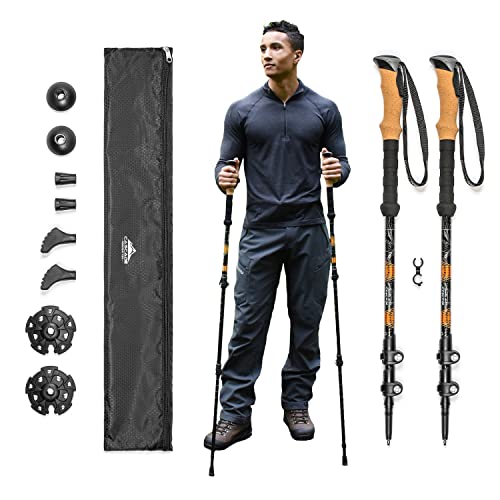
- Balance on icy descentsCascade Mountain Tech Trekking Poles, Cork GripFrom the listing · not tested$29.99 Amazon price as of Nov 16, 2026, 2:25 PM UTC (details)



A national park winter hike starts before the trailhead. The park sets the road closures, the chain rules and the camping bans, and the day is short enough that a slow start becomes a walk out in the dark. The gear list below assumes you have read the park's own winter page first.
How we chose: we did not test this gear; the picks come from makers' listings and published specs, checked through Amazon's Creators API on November 16, 2026, and kept only listings sold by Amazon.com or the brand's own store that were in stock or scarce. The park rules come from each park's own pages.
What should you check before a national park winter hike?
Start with the park's winter page, then the current conditions and alerts. Two examples show how much the rules change.
Acadia National Park closes the Park Loop Road, including Cadillac Mountain, to vehicles from December 1 through April 14, with a couple of short exceptions, weather permitting. The same page says there is no backcountry camping, overnight parking or winter camping allowed anywhere in Acadia.
At Yosemite, Tioga Road and the Glacier Point Road are usually closed by sometime in November, and tire chains are often required on park roads. Yosemite's tire chain page says that when chains are required you must carry them and know how to use them, whatever vehicle you drive.
The Forest Service's know-before-you-go page is the same starting point on national forest land: check the conditions and closures before you go.

What goes in a winter hiking gear checklist?
Pack in layers and pack for the stop, not just the walk. A winter park hike is usually a series of short stops for photos, a map check or a snack, and that is when you get cold.
- Base layer: a merino or synthetic long-sleeve top and bottoms. Our merino vs synthetic base layers guide compares the weights.
- Mid layer: a fleece or a light synthetic puffy, like the Powder Lite II, that you can take off while moving.
- Shell: a hooded, seam-taped rain jacket for wind and wet snow. Our rain jacket guide compares the published ratings.
- Legs: hiking pants with a base layer under them, or soft-shell pants. Avoid cotton next to the skin.
- Hands: insulated gloves or mittens and a thin liner. Our mittens and gloves guide has the warmth ratings.
- Head and face: a warm hat and a balaclava or neck gaiter, like the Minus33 balaclava. Our balaclava guide covers the wind-protection details.
- Feet: waterproof boots with room for a thick sock, and gaiters like the NAVAgaiter for snow.
- Traction: microspikes for packed ice, snowshoes for deep snow. More on that below.
- Poles: trekking poles with snow baskets, like the Cascade Mountain Tech pair.
- Light: a headlamp, plus a small backup light. The Cosmo 350 is the one here.
- Food and water: an insulated bottle so the water does not freeze, and food you can eat with gloves on.
Microspikes or snowshoes: which do you need?
The answer is the surface, not the forecast. Microspikes are for packed snow and ice: 12 steel spikes per foot on the Kahtoola MICROspikes bite into a trail that other boots have already compressed. Snowshoes are for unconsolidated snow, where a boot would posthole: the MSR Evo Trail spreads your weight over a 22 in deck.
Acadia's winter page gives a useful warning about traction. It says crampons, cleats and ice grippers "may allow you to travel much more safely on icy trails without contributing to trail widening," but that they "can have the opposite effect and be dangerous walking on slick granite surfaces." The same page calls trekking poles highly encouraged.
Two practical rules follow. First, microspikes on wet, bare granite are worse than boots; take them off for the rock. Second, if the snow is deep enough that you are sinking past the ankle, snowshoes save energy and keep you on top of the trail instead of widening it.
Some parks groom for snow: Acadia says 45 miles of carriage roads are open to cross-country skiing and snowshoeing. Yosemite's winter page notes that the Mariposa Grove trail may be snowy or icy and that skis or snowshoes may be appropriate. Check the park's page for the trail you plan, because a groomed carriage road and a steep hiking trail are different surfaces.

| Gear | What it does | What to check | Pick |
|---|---|---|---|
| Kahtoola MICROspikes | Grip on packed ice | Harness size over the boot | Icy trails |
| MSR Evo Trail | Flotation in deep snow | Deck size against pack weight | Fresh powder |
| Cascade Mountain Tech poles | Balance on ice and descents | 54 in maximum against your height | Loaded pack |
| Columbia Powder Lite II | Warmth under a shell | Fit over the base layer | Dry cold |
| Minus33 balaclava | Wind on the face and neck | Fit under a hood or helmet | Exposed ridges |
| Kahtoola NAVAgaiter | Snow out of the boot top | Size chart | Deep snow |
| Black Diamond Cosmo 350 | Light for the walk out | Battery type and spares | Short days |
Which layers work for a winter park hike?
A winter hiking layer system is a base layer that moves sweat, a mid layer that traps warmth and a shell that blocks wind and wet snow. The Powder Lite II is a synthetic mid layer with Omni-Heat lining and a water-repellent finish, which suits dry cold; when the snow turns wet, a seam-taped shell goes over it, as our rain jacket guide explains.
Hands and head lose heat fastest when you stop, so carry the balaclava and the gloves even if you start in them. If you run hot on the climb, vent the shell and the mid layer instead of sweating through the base layer. A wet base layer is the one layer you cannot fix on the trail.

How do you plan for shorter daylight?
In winter the sun is low and the day is short, and a park trail that is easy in July can take twice as long in snow. Set a turn-around time, not just a turn-around point, and carry the headlamp from the start. A phone battery drains fast in the cold, so keep it inside a jacket and do not rely on it for light.
Before you leave, check the avalanche forecast if the route crosses open slopes: the regional centers listed at avalanche.org publish daily forecasts. The NWS winter weather page covers the forecast side, and the wind chill chart turns temperature and wind into frostbite time.
How do you stay safe when the weather changes?
Turn back early. The NWS wind chill chart puts the wind chill at -19°F when the air is 0°F and the wind is 15 mph, with frostbite on exposed skin in about 30 minutes. On a ridge, the wind is stronger than it is in the parking lot.
Watch each other for the CDC's hypothermia signs: shivering, exhaustion, confusion, fumbling hands, slurred speech and drowsiness. A body temperature below 95°F is a medical emergency, and the CDC says to get medical attention immediately. Get the person out of the wind, into dry layers and into a warm vehicle. This page is not medical advice.
Related: our winter camping checklist, hiking gaiters guide and trekking umbrellas guide.
Frequently Asked Questions
Do I need snowshoes for a national park winter hike?
Not always. Snowshoes are for unconsolidated snow where boots posthole. On a packed or icy trail, microspikes are the lighter and better choice.
Are microspikes allowed on national park trails?
Generally yes, and Acadia explicitly discusses traction devices on its winter page. Take them off on bare rock: Acadia warns that they can be dangerous on slick granite.
Do national parks allow winter camping?
It varies. Acadia bans all winter camping in the park; for any park, check its winter and backcountry pages for permits and snow-travel rules before you plan a night out.
What should I wear for winter hiking in a national park?
A base layer, an insulated mid layer, a waterproof shell, insulated gloves, a warm hat and a balaclava, plus waterproof boots and gaiters. Add or remove the mid layer as you move.
Is a phone flashlight enough for a winter hike?
No. A headlamp leaves your hands free and works when the phone battery dies in the cold. Carry spare cells or a second light.
WildProofLab is a participant in the Amazon Services LLC Associates Program, an affiliate advertising program designed to provide a means for sites to earn advertising fees by advertising and linking to Amazon.com. Park rules change; check the park's own page before you go.
Proof
Sources
Everything this guide relies on, as linked in the text. Last checked November 16, 2026.
- National Park Service: Acadia National Park
- National Park Service: Yosemite
- National Park Service: Tire chain page
- USDA Forest Service: Forest Service's know-before-you-go page
- avalanche.org: avalanche.org page
- National Weather Service: NWS winter weather page
- National Weather Service: NWS wind chill chart
- Centers for Disease Control and Prevention: CDC's hypothermia signs
Shop on Amazon
Quick searches, tagged so you support the site at no extra cost.
As an Amazon Associate I earn from qualifying purchases.


